What is Lead Generation? A Simple Guide for Business Owners
If you run a business—whether it’s a small local shop or a growing online brand—you’ve probably heard the term lead generation many times. But what does it truly mean? And why is it so important for business growth?
In this simple guide, we’ll break down what lead generation is, how it works, why every business needs it, and the easiest ways to get started.
What is Lead Generation?
Lead generation is the process of attracting potential customers (called leads) who show interest in your products or services.
These people are not yet ready to buy, but they are interested enough to connect with your business—by filling out a form, calling you, signing up, or requesting information.
In simple terms:
Lead generation = finding people who may become your customers.
Why Is Lead Generation Important?
Without leads, you can’t get customers. Without customers, you can’t grow.
Here’s why lead generation matters:
✔️ Helps you reach the right audience
Instead of marketing to everyone, you target people who are actually interested.
✔️ Increases sales
More leads = more opportunities to convert them into paying customers.
✔️ Improves brand awareness
Your business becomes more visible to people searching for your solutions.
✔️ Builds long-term relationships
Not all leads buy immediately, but good nurturing brings long-term sales.
How Does Lead Generation Work? (Simple Explanation)
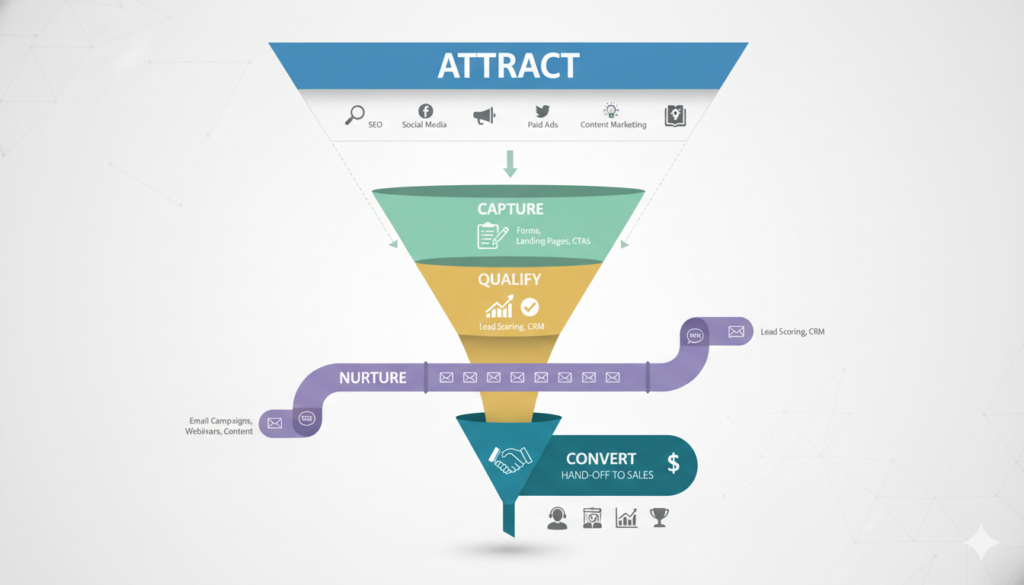
Lead generation usually follows three simple steps:
1. Attract
You bring people to your website or landing page using:
- Social media posts
- Google Ads
- SEO (search engine optimization)
- Blog content
- Email marketing
2. Capture
You collect their details (name, phone, email, etc.) using:
- Contact forms
- Inquiry forms
- Lead magnets (ebooks, coupons, free guides)
- Calls or WhatsApp messages
3. Convert
You follow up with leads through:
- Email marketing
- WhatsApp updates
- Phone calls
- Automated nurturing
The goal?
Turn interested visitors into paying customers.
Types of Lead Generation Every Business Should Know
1. Inbound Lead Generation
Leads come to you because they find your content, ads, or website helpful.
Example: Someone searches “best interior designer near me,” finds your site, and fills a contact form.
2. Outbound Lead Generation
You reach out to them.
Example: Cold calling, email outreach, running ads, etc.
3. Online Lead Generation
Happens through digital tools:
- Facebook & Instagram ads
- Google Lead Forms
- SEO blogs
- Landing pages
4. Offline Lead Generation
Traditional methods:
- Events
- Flyers
- Networking
- Referrals
Most modern businesses use a mix of online + offline.
Best Lead Generation Methods for Small & Medium Businesses
If you are a business owner looking for easy and effective methods, here are the top strategies:
1. Social Media Ads
Running targeted ads on Facebook, Instagram, and LinkedIn brings faster leads.
2. Google Ads (Search & Display)
People already searching for your service become high-quality leads.
3. SEO-Based Content
Publishing blogs (like this one!) attracts long-term free leads.
4. WhatsApp & Email Marketing
Great for nurturing existing leads and increasing conversions.
5. Lead Magnet Offers
Offer something valuable for free:
- Guide
- Discount
- Free consultation
People sign up → You get their details → They become leads.
How to Know if Your Lead Generation is Working?
Track these metrics:
- Number of leads per day/week
- Cost per lead
- Lead-to-customer conversion rate
- ROI on ads and marketing
- Landing page conversion rate
If these numbers improve, your lead generation is on the right path.
Conclusion
Lead generation is the backbone of every growing business.
It’s not just about getting phone numbers—it’s about building a consistent pipeline of interested customers who can drive long-term revenue.