B2B vs. B2C Lead Generation: Why the Strategies Are Not the Same.
Are you treating all your potential customers the same, regardless of whether they’re a business or an individual? If so, you’re likely missing out on valuable leads. While the end goal of lead generation is always to attract new customers, the path to achieving it is drastically different when comparing B2B (business-to-business) and B2C (business-to-consumer) markets. Understanding these core distinctions is paramount, and often, a specialized lead generation service can provide the tailored expertise you need.
Let’s dive into why your B2B and B2C lead generation strategies cannot, and should not, be identical.
The Fundamental Difference: Who Are You Talking To?
The root of all strategic differences lies in the audience itself.
B2C: The Individual Consumer
- Who: An individual purchasing for personal use or household needs.
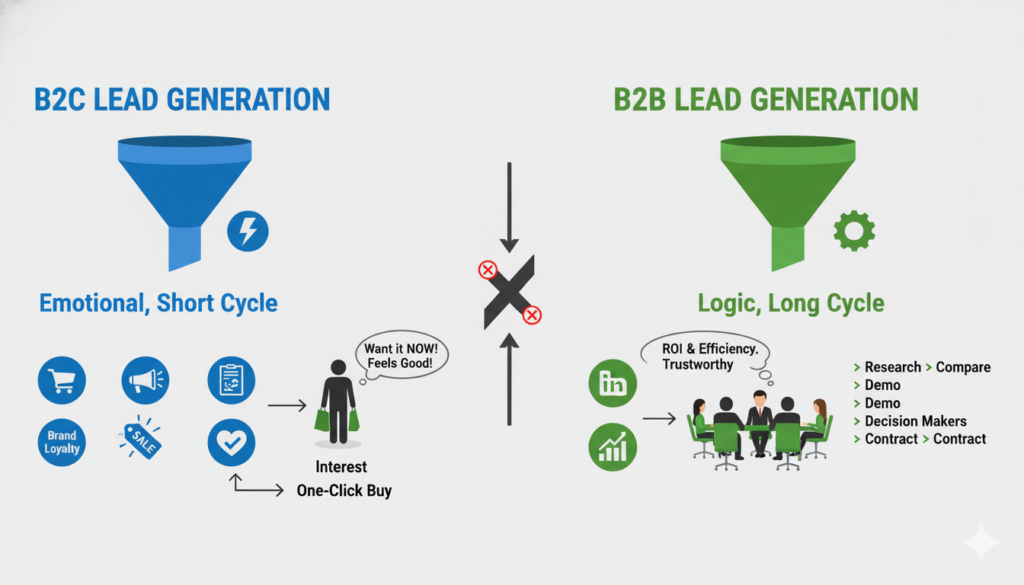
- Motivations: Often emotional, driven by desire, convenience, social status, or solving an immediate personal problem. “I want it now, and it makes me feel good!”
- Decision-Making: Typically a single person or a small family unit. Decisions can be quick, even impulsive.
- Sales Cycle: Shorter, from initial interest to purchase.
- Transaction Value: Generally lower per purchase.
- Relationship Focus: Can be transactional, but brand loyalty through positive experiences is key.
B2B: The Business Entity
- Who: Representatives of an organization purchasing for company needs, to improve operations, increase revenue, or solve business challenges.
- Motivations: Strictly logical, focused on ROI, efficiency, cost savings, security, scalability, and long-term strategic benefits. “Does this make business sense, and what’s the measurable impact?”
- Decision-Making: A complex process involving multiple stakeholders (e.g., procurement, IT, department heads, finance, C-suite). Consensus is often required.
- Sales Cycle: Significantly longer, involving research, proposals, demos, and negotiations.
- Transaction Value: Often much higher, with recurring contracts and significant impact.
- Relationship Focus: Building long-term partnerships, trust, and demonstrating ongoing value.
Why Your Lead Generation Strategies Must Diverge
Given these contrasting profiles, it’s clear that the tactics you employ to attract, engage, and convert leads need to be fundamentally different.
B2C Lead Generation: Embracing Emotion and Speed
B2C strategies thrive on broad appeal, emotional connection, and streamlining the path to purchase.
- Marketing Channels: Focus heavily on visually-driven social media (Instagram, TikTok, Facebook), influencer marketing, SEO for consumer-focused keywords, and eye-catching display ads. The goal is to interrupt, engage, and drive immediate action.
- Content: Short-form, engaging, benefit-oriented content. Think appealing images, short videos, user-generated content, customer reviews, and enticing calls-to-action like “Shop Now” or “Limited-Time Offer.”
- Lead Capture: Often straightforward—newsletter sign-ups, direct purchases, quizzes, or contests that capture basic contact info for future promotions.
- Nurturing: Primarily through promotional emails, loyalty programs, and re-targeting ads highlighting new products or sales.
B2B Lead Generation: The Power of Logic and Relationships
B2B strategies demand precision, education, and a focus on building long-term trust and demonstrating clear ROI.
- Marketing Channels: Professional networks like LinkedIn are paramount. In-depth content marketing (whitepapers, case studies, webinars, industry reports), SEO for highly specific business keywords, account-based marketing (ABM), and industry events are crucial.
- Content: Educational, data-driven, problem-solving, and thought-leadership content. Leads are looking for solutions to complex business problems, not just a quick fix. Free trials, detailed product demos, and consultations are common lead magnets.
- Lead Capture: More comprehensive forms that gather detailed company information, job roles, and specific needs, allowing for better qualification.
- Nurturing: A longer, more personalized journey involving multi-touch email campaigns, personalized outreach from sales development representatives (SDRs), and valuable content that addresses specific business challenges at different stages of the buying cycle.
How a Specialized Lead Generation Service Bridges the Gap
Navigating the complexities of both B2B lead generation and B2C lead generation simultaneously can be overwhelming for any business. This is precisely where a dedicated lead generation service becomes invaluable.
An expert lead generation service can:
- Tailor Strategies: They understand the nuances and can develop distinct, highly effective strategies for your specific B2B or B2C target audience.
- Optimize Channels: They know which platforms and tactics will yield the best results for each market, saving you time and marketing spend.
- Craft Compelling Content: They can create the appropriate type of content—whether it’s an emotionally resonant Instagram ad for B2C or a data-rich whitepaper for B2B.
- Improve Qualification: They implement sophisticated lead scoring and qualification processes that filter out unsuitable leads, ensuring your sales team focuses on the most promising opportunities.
- Provide Expertise: Access to specialists who stay abreast of the latest trends and best practices in both lead generation realms.
In essence, a professional lead generation service helps you avoid the pitfalls of a generic approach, ensuring your efforts are perfectly aligned with the unique journey your B2B and B2C customers take from initial interest to conversion. Don’t let your valuable leads slip away; embrace tailored strategies for maximum impact.